Paysafecard for iGaming: Prepaid Casino Payments Explained

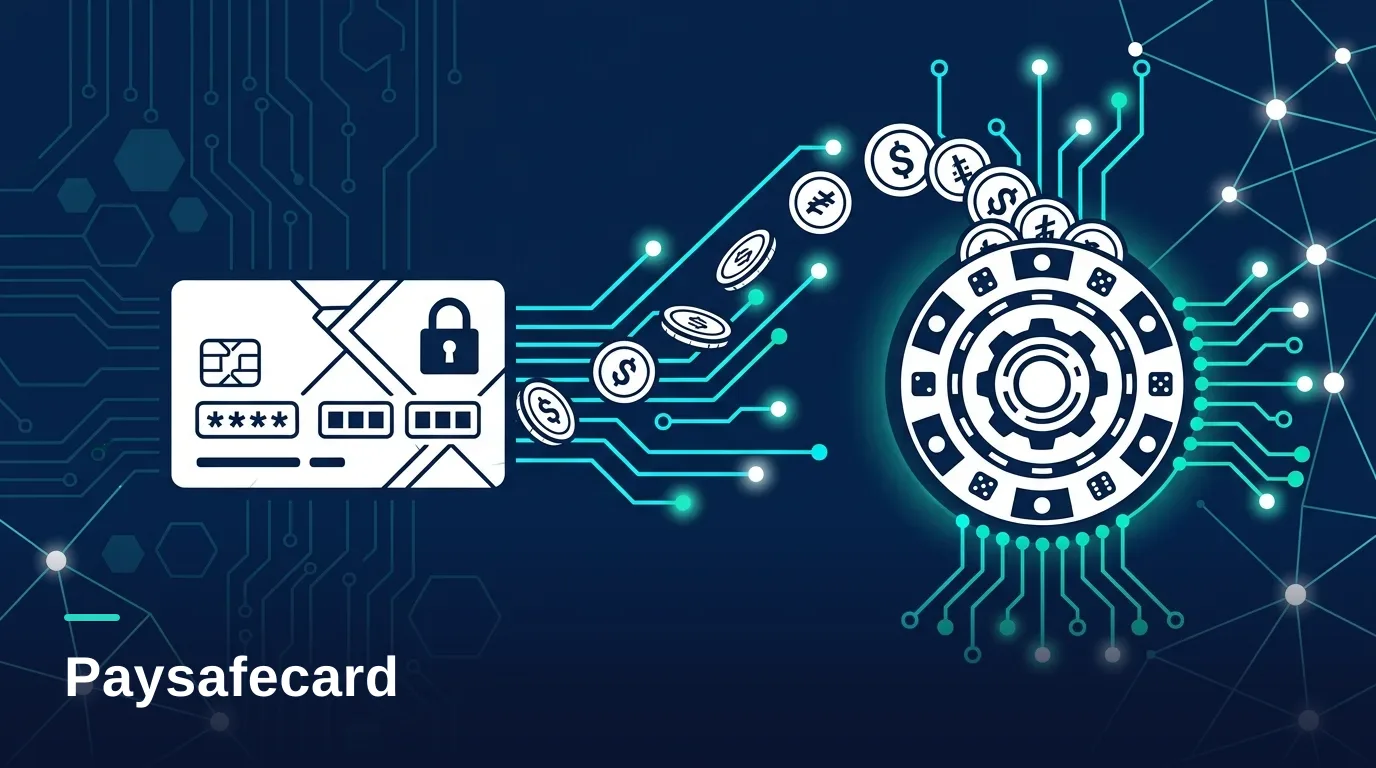
Paysafecard for iGaming is a cash-based way for players to fund a gambling account without a card, a bank login or any financial details. The player buys a voucher, types in a code, and the deposit clears.
For operators it sits in an odd place. It brings in players who won't or can't use a card, and it can't be charged back. But it only works one way - money comes in, money doesn't go out - and it doesn't let anyone off the hook for KYC.
This guide covers how Paysafecard works, why operators offer it, where it falls down, and how it compares to the e-wallets in the same corporate family. Facts verified as of September 2026.
What is Paysafecard?
Paysafecard is a prepaid voucher that lets someone pay online using cash. The player buys a voucher with a 16-digit PIN, then enters that PIN at checkout instead of card or bank details.
Term: Paysafecard. Definition: A prepaid cash voucher, identified by a 16-digit PIN, used to pay online without sharing bank or card information.
It was founded in Vienna in 2000 and is now part of Paysafe (NYSE: PSFE), the same group that owns Skrill and Neteller. Vouchers are sold at shops, kiosks and petrol stations - more than 600,000 outlets across roughly 50 countries, according to Paysafe - and can also be bought online. You can read the mechanics on the official Paysafecard how-it-works page.
How does Paysafecard work for iGaming deposits?
A player buys a voucher for a set amount, then enters the 16-digit PIN on the operator's deposit page. The value clears instantly and the balance drops by whatever was staked.
Vouchers come in fixed denominations - in the UK, typically £10 to £100. Players can combine several PINs to fund a larger deposit, or register a my paysafecard account to store PINs, pay with a username and password, and check the running balance.
The deposit side is simple, and that's the appeal. There's no 3-D Secure step, no issuer sitting in the middle deciding whether to approve, and no card number to leak. For the wider decline problem that cards create, our guide to iGaming approval rates covers where deposits actually fail.
Who owns Paysafecard and is it regulated?
Paysafecard is owned by Paysafe, a payments group listed on the New York Stock Exchange. The product is issued as electronic money by regulated entities, not by an unlicensed voucher seller.
In the UK, Paysafecard is issued by Prepaid Services Company Limited, an electronic money institution authorised by the Financial Conduct Authority. Paysafe first secured an EEA-wide e-money licence back in 2008, which is why the same voucher works across dozens of markets.
That regulatory footing matters for operators. A licensed e-money issuer is subject to safeguarding and AML rules of its own, which makes it a defensible method to list next to cards and open banking - unlike an unregulated cash-code scheme, which no compliance team should touch.
Why do operators offer Paysafecard for gambling?
Two reasons: it reaches players cards don't, and prepaid deposits can't be reversed. A voucher is spent money, so there's no issuer to raise a dispute.
No chargebacks is the headline. A card deposit can come back as a chargeback weeks later; a Paysafecard deposit can't, because there's no card account behind it. That removes a whole category of dispute risk - the kind our guide to iGaming chargebacks deals with in depth.
It also reaches the unbanked, the privacy-conscious, and players who set their own hard limits by depositing only what's on a voucher. In some markets that self-control is the whole point - the player literally can't spend more than they bought.
One nuance worth stating plainly: in Great Britain, the Gambling Commission's credit card gambling ban, in force since 14 April 2020, also covers e-money and prepaid products funded by a credit card. A cash-bought voucher is fine. A voucher a player funded on credit is not, and the operator carries the obligation to prevent gambling on credit through any route.
Can players withdraw winnings with Paysafecard?
Usually not. Paysafecard is a deposit-only method for most operators - the voucher system takes money in but has no standard way to pay it back out.
When a player who deposited by voucher wants to cash out, the operator asks them to pick another payout route: bank transfer, a debit card, or an e-wallet such as Skrill or Neteller. That's a friction point, and it's worth setting expectations for at deposit time rather than at withdrawal.
There is a partial exception. Paysafe offers a paysafecard Mastercard - a reloadable prepaid card in some markets - that can receive funds and then be spent anywhere Mastercard is accepted. It's not universal, so treat voucher deposits as one-directional and plan payouts separately. Our guide to iGaming withdrawal processing covers the payout side properly.
Does Paysafecard remove the need for KYC and AML checks?
No. The absence of bank details at deposit does not remove an operator's know-your-customer or anti-money-laundering duties. Those obligations sit with the licensed operator, whatever method the money arrived by.
Anonymity at the till is not anonymity at the casino. A licensed operator still verifies identity and age, applies source-of-funds checks where thresholds are hit, and runs its responsible-gambling tools. Our guide to KYC and AML for iGaming sets out where those duties bite.
Paysafecard has its own age gate too - the minimum age for a my paysafecard account is 16 in most countries, per Paysafe's own age-limit guidance. That is separate from, and lower than, the 18+ requirement to gamble. Don't confuse the two.
Paysafecard vs e-wallets: what's the difference?
A Paysafecard is prepaid cash with no account required; an e-wallet like Skrill or Neteller is a funded account that supports both deposits and withdrawals. Same corporate owner, different job.
- Direction: Paysafecard is deposit-only for most operators; e-wallets handle payouts too.
- Funding: a voucher is bought with cash; an e-wallet is topped up from a card or bank.
- Account: a basic voucher needs no registration; an e-wallet always does.
- Reversibility: neither exposes the operator to card-style chargebacks once funds have cleared.
For the account-based side of that comparison, see our guide to e-wallets for iGaming. Most operators end up offering both, because they serve different players.
What are the limits and fees on Paysafecard?
Limits depend on the country and on whether the player has a verified my paysafecard account. Fees are mostly charged to the player, not the operator, though acceptance still costs the operator a processing fee.
Unverified voucher use is capped fairly low per transaction in many markets; a verified my paysafecard account raises the per-voucher ceiling substantially. The exact figures vary by country and change over time, so check Paysafe's current market schedule rather than quoting a number that may be stale.
On the operator side, Paysafecard is a method you enable through a PSP or orchestration layer, priced like other alternative payment methods. To see which providers in your region support it, browse the iGamingPayments.ai directory, and model what a method mix does to your costs with the fee calculator.
Key Takeaways
- Paysafecard is a prepaid cash voucher with a 16-digit PIN - no card or bank details needed to deposit
- It's owned by Paysafe (NYSE: PSFE), the same group behind Skrill and Neteller, and issued as regulated e-money
- Prepaid deposits can't be charged back, which removes a whole category of dispute risk for operators
- It's deposit-only for most operators - players cash out via bank transfer, debit card or an e-wallet
- Using a voucher does not remove KYC, AML or age-verification duties, which stay with the licensed operator
- In Great Britain the credit card gambling ban also covers prepaid products funded by credit
Frequently asked questions
Is Paysafecard safe for online gambling?
Yes, at a licensed operator. Paysafecard is issued as regulated electronic money and never exposes a player's bank or card details to the casino, because there aren't any to share. The usual advice applies: only deposit at operators licensed in your market.
Can I withdraw casino winnings to Paysafecard?
Usually not. Paysafecard is a deposit method, so operators pay winnings out through another route - typically bank transfer, a debit card, or an e-wallet like Skrill or Neteller. The paysafecard Mastercard can receive funds in some markets, but it isn't available everywhere.
Does using Paysafecard mean I can gamble anonymously?
No. You can buy the voucher without giving details, but a licensed operator still verifies your identity and age and runs AML checks. The voucher is anonymous at the shop, not at the casino.
Is Paysafecard free to use?
Buying and depositing a voucher is generally free to the player, though a dormant my paysafecard balance can attract a maintenance fee after a period of inactivity, and currency conversion may apply. On the operator side, acceptance carries a processing fee like any payment method.
What happens if a player funds a Paysafecard with a credit card in the UK?
That falls foul of the Gambling Commission's credit card ban, which extends to prepaid and e-money products funded by credit. A cash-bought voucher is compliant; a credit-funded one used to gamble is not, and the operator is expected to prevent gambling on credit through any channel.
Why do operators offer Paysafecard if they can't use it for payouts?
Because it reaches players who won't use cards, and its deposits can't be charged back. The one-way limitation is a known trade-off - operators simply route withdrawals through another method and set that expectation up front.
Who owns Paysafecard?
Paysafe, a specialised payments platform listed on the New York Stock Exchange as PSFE. The same group owns the Skrill and Neteller e-wallets, which is why they often appear together in an operator's cashier.
Christian Hodges has worked in payments and iGaming since 2010. He is the Founder of iGamingPayments.ai, an independent marketplace connecting operators with payment infrastructure, and the creator of the iGaming Roundtable Network, a community of over 850 senior industry professionals. He also acts as a fractional commercial strategist for iGaming suppliers.
Find the right payment provider for your operation
Browse 342+ vetted PSPs, crypto processors, open banking providers and fraud vendors - filtered by region, vertical and payment method. Or run the numbers before your next PSP negotiation.