Open Banking for iGaming: What UK and EU Operators Need to Know
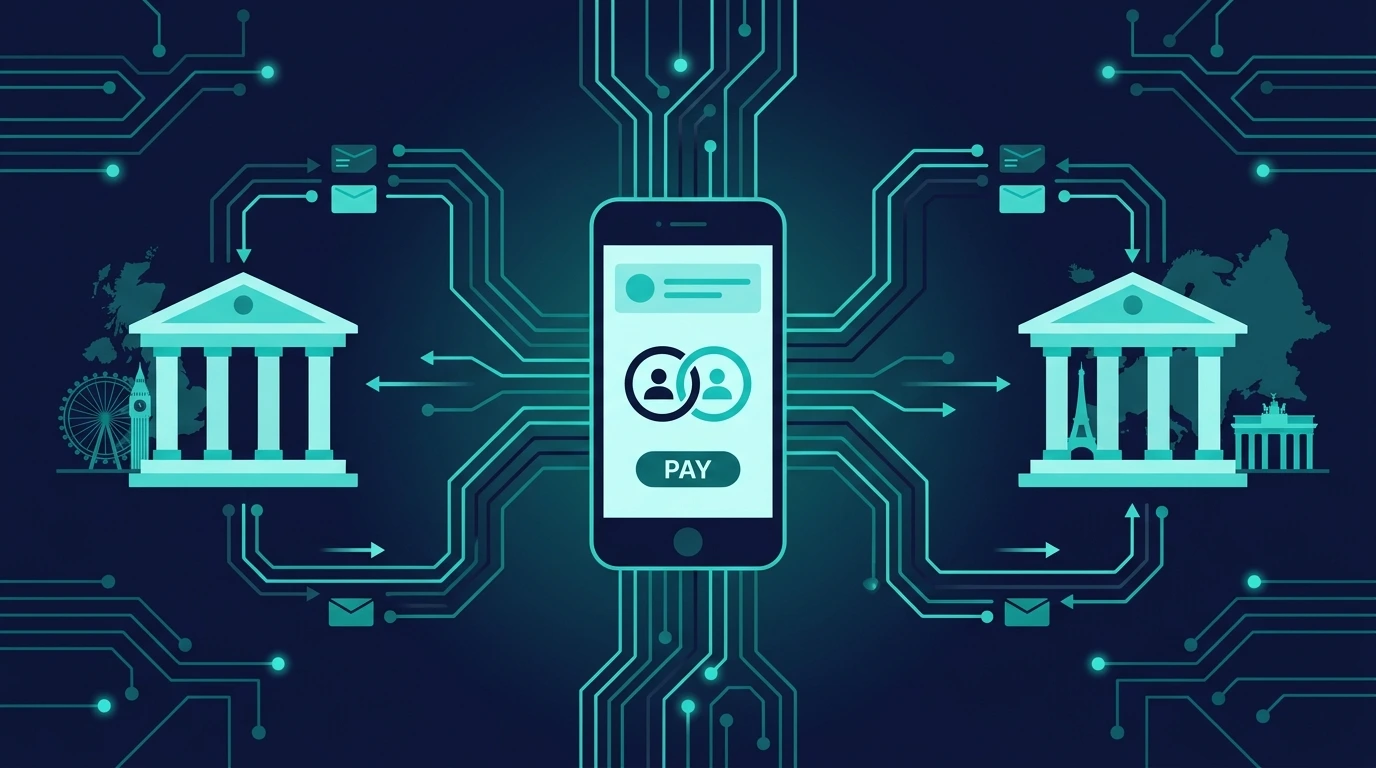
Open banking didn't arrive quietly in iGaming. It arrived and immediately started outperforming cards in markets where it's available.
In the UK, Pay by Bank transactions are standard at most regulated casinos and sportsbooks. Approval rates are higher than cards. Chargebacks are structurally impossible. Funds land in seconds. For operators still treating it as a niche feature, the data makes the case better than any sales pitch.
This article covers how open banking iGaming payments work, where they make sense, which providers cover which markets, and the areas where open banking still falls short.
What is open banking in iGaming?
Open banking in iGaming refers to account-to-account payment infrastructure that allows players to deposit and withdraw directly from their bank account via regulated APIs, without using card networks. Payments are authorised through the player's banking app and settle via national fast payment schemes - UK Faster Payments in the UK, SEPA Instant across supported EU markets.
Term: Open banking iGaming. Definition: Account-to-account payments for gambling operators that use regulated bank APIs to move funds directly between player and operator bank accounts, bypassing card networks entirely.
The payment rails differ from cards in every meaningful respect. No card scheme fees. No interchange. No chargeback mechanism. No card number stored anywhere. Authentication happens inside the player's own banking app, which means stronger fraud resistance than entering card details on a cashier page.
How do open banking deposits work for iGaming?
A player selects Pay by Bank at the cashier. They choose their bank from a list, are redirected to their banking app or online banking portal, and authorise the payment using their bank's own authentication - biometric, PIN, or push notification. Funds land in the operator's account within seconds via Faster Payments or SEPA Instant.
The operator never sees the player's bank account details. No card data is processed. The payment confirmation comes back from the bank via the open banking API, meaning the operator can confirm receipt before the player is returned to the lobby.
From a player experience standpoint, it's faster than filling in card details, faster than logging into PayPal, and more familiar than crypto for anyone who has used mobile banking in the last three years.
Why do open banking payments achieve higher approval rates than cards?
Card payments fail for multiple reasons - insufficient funds, card scheme blocks on gambling MCC codes, bank-level restrictions on gambling transactions, fraud filters triggering on an unfamiliar merchant. Open banking payments fail for one reason: insufficient funds.
Bank authentication means the bank has already verified the account holder. Gambling MCC code blocks don't apply because card schemes aren't involved. The transaction goes directly from the player's account to the operator's account with no intermediary that can decline for policy reasons.
A UK sportsbook I know of had card approval rates sitting at 78%. After adding open banking via Trustly, their open banking approval rate ran above 96%. The failed 4% were almost entirely insufficient funds. That delta doesn't mean operators should remove cards - it means open banking captures deposits that cards lose, and overall conversion improves.
What's the difference between open banking deposits and withdrawals?
Open banking deposits (Pay by Bank) require the player to actively authorise each transaction through their banking app - a pull request initiated by the player. Open banking withdrawals are operator-initiated push payments sent to the player's bank account. In the UK these run on Faster Payments and settle in seconds. In the EU, SEPA Instant handles the same function where the player's bank is enrolled.
Some providers support both from a single integration. Others are deposit-only. This matters at the point of provider selection. An operator that integrates open banking for deposits but still uses slow bank transfers for withdrawals misses most of the player experience benefit. The guide to iGaming payout processing covers the withdrawal side in full.
Which markets does open banking cover for iGaming operators?
United Kingdom
The most mature open banking market for iGaming. The FCA regulates open banking providers as Authorised Payment Institutions or Account Information Service Providers. Pay by Bank is available at most UK-licensed operators. Providers with solid UK coverage include Trustly, Volt, Token.io, Ecospend (Mastercard's open banking arm), and TrueLayer.
European Union
Open banking under PSD2, and now PSD3 (in implementation across EU member states as of June 2026), has made account-to-account payments available across the bloc. Adoption varies significantly by country. The Netherlands, Germany, and the Nordics have strong banking app infrastructure and solid open banking API quality. Southern European markets are less penetrated and bank API reliability is patchier.
Brazil
Not technically open banking in the European sense, but Pix - the Central Bank of Brazil's instant payment system - operates on the same principles. Account-to-account, instant settlement, regulated API infrastructure. For operators in the Brazilian regulated market (regulated since January 2025 under Law 14.790/2023), Pix is the dominant deposit and withdrawal method. Treating Pix as an afterthought in Brazil is the equivalent of ignoring cards in the UK.
LATAM excluding Brazil
Colombia has PSE direct bank transfer. Mexico has SPEI instant transfers. Peru has Pago Efectivo. Chile has MACH and Webpay. Coverage through a single provider across multiple LATAM markets remains limited - most operators need separate local payment integrations per country rather than a unified open banking solution.
What does open banking cost compared to card processing?
Open banking transactions typically cost between 0.1% and 0.5% per transaction for UK and EU operators. Card interchange for gambling merchants runs between 1.5% and 3.5% depending on card type, geography, and volume - and that's before scheme fees and assessment fees on top.
For an operator processing £5 million per month in deposits, the fee difference between open banking and cards on the same volume is material. The caveat: open banking can't fully replace cards. Card penetration is universal. International players may not have UK or EU bank accounts. Some players simply prefer their card and won't change.
The cost benefit makes open banking worth integrating for every operator in a covered market. It doesn't make it worth removing everything else.
Open banking vs cards vs e-wallets: which should operators prioritise?
This depends on market and player profile, not a single answer across the board.
UK and EU operators should offer open banking alongside cards and at least one e-wallet. In the UK, open banking is table stakes for a well-run cashier. Don't replace cards with it but don't leave it off the options list.
LATAM operators should prioritise Pix in Brazil (non-negotiable for the regulated market) and relevant domestic instant payment methods in each additional country. Open banking in the European regulatory sense is less applicable here.
High-volume sportsbooks see the highest impact from open banking at peak betting events - major match days, racing fixtures - when deposit volumes spike and card friction loses bets in real time. Fast, high-approval-rate deposits at those moments directly affect handle.
Crypto casinos - open banking is less relevant for a player base that specifically wants crypto and the pseudonymity that comes with it. The use cases don't overlap much.
What are the limitations of open banking for iGaming?
Operators who integrate open banking and then don't monitor its performance make a mistake. There are genuine limitations worth understanding before signing with a provider.
Bank API coverage gaps - not every bank in every market has a high-quality open banking API. Smaller banks and building societies in the UK can have APIs that drop at peak times. Reliability varies considerably even within the same country.
Authentication UX on mobile - strong customer authentication is the security feature, but it adds a redirect step. A player on mobile moving from the casino cashier to their banking app and back needs that redirect to be smooth. On poor network connections or older devices, the redirect can break, causing abandoned deposits the operator then has to investigate and reconcile.
No international coverage - open banking requires a bank account in a supported country. International players, players without a local bank account, and unbanked players can't use it. A UK operator with players from Eastern Europe, MENA, or APAC still needs cards and e-wallets for those segments.
Withdrawal infrastructure gaps - outbound open banking payments require the operator's banking partner to support Faster Payments or SEPA Instant outbound. Not all banking-as-a-service providers cover this natively. Confirm before assuming the deposit integration covers withdrawals too.
Browse open banking providers in the iGamingPayments.ai directory filtered by region to compare who covers which markets and both payment directions. See also the guide to iGaming payment processing for how open banking fits into the broader payment stack.
Key Takeaways
- Open banking deposits achieve approval rates above 90% in the UK because card scheme MCC blocks don't apply
- Costs run 0.1% to 0.5% per transaction - significantly below card interchange of 1.5% to 3.5%
- Open banking improves overall conversion by capturing deposits cards would have lost - it doesn't replace cards
- UK, EU, and Brazil (via Pix) are the most mature markets; LATAM outside Brazil needs per-country local integrations
- Not all providers support both deposits and withdrawals from the same integration - confirm both before going live
- PSD3, in implementation as of June 2026, improves bank API reliability and authentication consistency across EU markets
Frequently asked questions
What is open banking and how does it work for gambling sites?
Open banking allows gambling sites to accept deposits and process withdrawals directly to and from players' bank accounts via regulated APIs. Instead of entering card details, the player selects their bank, authorises the payment inside their banking app, and funds transfer via national fast payment infrastructure - Faster Payments in the UK, SEPA Instant in the EU. No card scheme is involved, which means no card blocks, no interchange, and no chargebacks.
Is open banking safe for iGaming deposits?
Yes. Authentication happens inside the player's own banking app using the bank's security layer - biometrics, PINs, or push notifications. The operator never processes or stores card numbers. Under PSD2 and PSD3 in the EU, and FCA regulation in the UK, open banking providers must be licensed and meet strict security requirements. The absence of a chargeback mechanism actually reduces fraud risk from the operator's perspective - there's no mechanism for a player to reverse an authorised payment.
Which open banking providers work with iGaming operators?
UK and EU providers with iGaming coverage include Trustly, Volt, Token.io, Ecospend, TrueLayer, and Yapily. Coverage varies by market - Trustly has broad European reach, Volt focuses on UK and EU, and some providers are deposit-only. You can compare open banking providers in the directory by geography and capability before shortlisting.
Can open banking replace cards in iGaming?
No, and operators shouldn't try. Card penetration is universal; open banking coverage is geographic and demographic. International players without local bank accounts and players less comfortable with mobile banking app authorisation won't have open banking as a workable option. The right approach is offering open banking alongside cards - it captures deposits cards lose and reduces overall processing costs on the volume it handles.
Is open banking available in LATAM for iGaming?
Brazil's Pix is the closest equivalent and has been mandatory for licensed Brazilian operators since the market opened in January 2025 under Law 14.790/2023. Other LATAM markets have domestic instant payment schemes that function similarly - SPEI in Mexico, PSE in Colombia - but aren't open banking in the European regulatory sense. Coverage through a single provider across multiple LATAM markets is limited; separate local integrations per country are still the norm.
What happens if an open banking payment fails mid-flow?
Open banking failures are typically insufficient funds, a bank API error, or an abandoned authentication - the player left the banking app without completing authorisation. Unlike card declines, failed open banking attempts don't trigger fraud signals that affect future payment success rates. Most operators configure a card fallback if open banking fails mid-flow so the deposit opportunity isn't lost. Monitor success rates by bank, not just by provider - individual bank API performance varies considerably.
What does PSD3 mean for iGaming operators using open banking?
PSD3 is in implementation across EU member states as of June 2026. It requires banks to offer premium open banking APIs rather than the minimum compliance version PSD2 allowed. The practical effect for iGaming operators is better API uptime, more consistent authentication UX across the EU, and stronger refund rights for misdirected payments. Full implementation timelines vary by member state - check the European Commission's PSD3 adoption tracker for your target markets.
Does open banking work for iGaming withdrawals as well as deposits?
Yes, but the mechanics differ. Deposits are player-initiated authorisations; withdrawals are operator-initiated push payments sent directly to the player's bank account. In the UK these settle via Faster Payments in seconds. In the EU, SEPA Instant applies where the player's bank is enrolled. Not all open banking providers support both directions - some are deposit-only. Confirm withdrawal capability at the point of integration, not after you've gone live with deposits.
Find the right payment provider for your operation
Browse 342+ vetted PSPs, crypto processors, open banking providers and fraud vendors - filtered by region, vertical and payment method. Or run the numbers before your next PSP negotiation.