Apple Pay and Google Pay for iGaming Explained
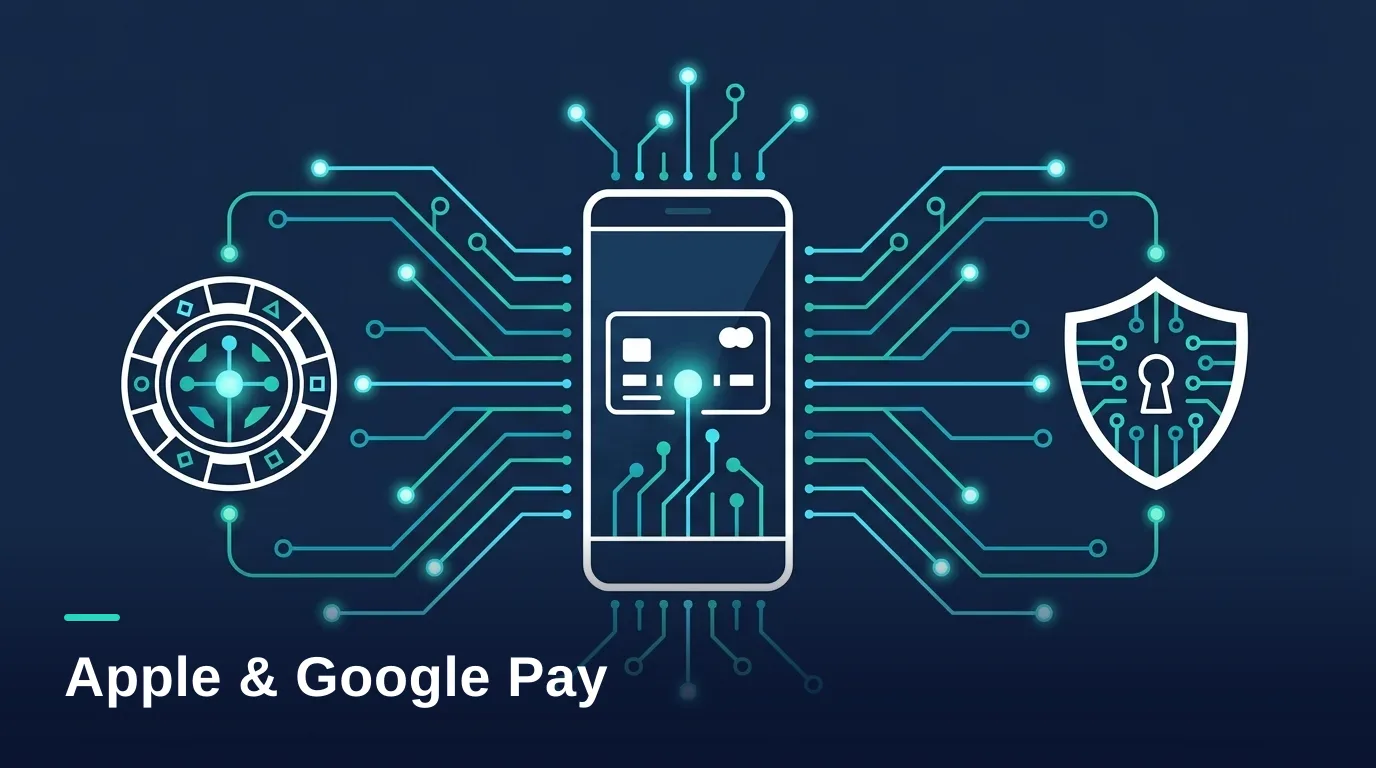
Apple Pay for iGaming isn't a new payment rail. It's a faster, safer front end on the card rails an operator already runs, and for most casinos and sportsbooks it quietly does two things at once: it lifts approval rates and it removes checkout friction.
Players tap a fingerprint or glance at a screen and the deposit clears. Behind that tap sits tokenisation and built-in authentication that a plain card form can't match. Google Pay does the same job on Android.
The catch is that a wallet only works if your acquirer supports it for gambling, and in some markets the funding card has to be a debit card. This guide covers how the wallets work, where the traps are, and what they change for an operator. Facts verified as of September 2026.
What is Apple Pay for iGaming?
Apple Pay for iGaming is the use of Apple's mobile wallet to fund and, in some cases, withdraw from a licensed gambling account. The player pays with a card already stored on their iPhone, authenticated by Face ID or Touch ID, instead of typing card details into a deposit form.
Term: Apple Pay for iGaming. Definition: A tokenised, biometrically authenticated way for players to deposit at a gambling operator using a card held in Apple's Wallet app, running over the existing Visa and Mastercard rails.
The important word is tokenised. Apple Pay doesn't hand the operator a real card number. It passes a device-specific token and a one-time cryptogram, which the card network turns back into the underlying card at the point of authorisation. The same model underpins Google Pay on Android and both wallets feed into the wider shift to network tokens in iGaming.
How does Apple Pay tokenisation work?
When a player adds a card to Apple Pay, the real card number is replaced on the device by a Device Account Number, or DPAN. Every payment sends that DPAN plus a single-use cryptogram, so the operator and its payment provider never see or store the real card.
Apple's own Merchant Integration Guide sets out the flow: the DPAN lives in the device secure element, is unlocked only by the player's biometric or passcode, and is decrypted back to the funding card by the card scheme, not the merchant.
Term: DPAN. Definition: A Device Account Number - a card token unique to one device, used in place of the real card number so a breach at the operator exposes nothing reusable.
For an operator this matters beyond security. A stored real card is PCI DSS scope; a wallet token isn't the cardholder data PCI is built to protect in the same way. And because the token is issued and kept fresh by the scheme, expired-card declines and reissued-card failures drop away.
Does Apple Pay count as strong customer authentication?
Yes. A Face ID or Touch ID check on Apple Pay is a two-factor event - something the player has (the device) and something they are (the biometric) - which satisfies Strong Customer Authentication under PSD2 and the UK regime. Google Pay works the same way.
This is the single biggest operational reason to offer the wallets. Under the FCA's Strong Customer Authentication rules, most remote card payments need SCA, and the usual route is a 3-D Secure challenge that interrupts the player. Apple Pay carries the authentication inside the wallet, so the transaction arrives already authenticated.
An authenticated wallet payment skips the separate 3DS step players hate. Google's own SCA guidance makes the same point for Google Pay: the biometric prompt already meets the standard, so most transactions run frictionless.
Fewer challenge screens means fewer abandoned deposits. On mobile, where a redirect to a bank app can kill a deposit outright, that gap is real money.
Apple Pay vs Google Pay for iGaming: what's the difference?
For the operator, very little. Both are tokenised, both carry SCA, both settle over the same card networks. The difference is the device, the token type, and a few integration details - not the economics.
- Platform. Apple Pay runs on iPhone, iPad, Apple Watch and Safari. Google Pay runs on Android and Chrome. Between them they cover almost every player device.
- Token model. Apple Pay uses a device token (DPAN) held in the secure element. Google Pay uses a device token on newer Android hardware and can fall back to a network token or a server-side cryptogram on the web.
- Authentication. Apple Pay always requires a biometric or passcode. Google Pay may not prompt for low-value in-store taps, but web and higher-value payments trigger a check, which is what delivers SCA.
- Reach. In markets skewed to iPhone, Apple Pay coverage matters more; in Android-heavy markets like much of Latin America and Africa, Google Pay does.
My advice is simple: offer both or offer neither. Running one and not the other just tells half your players their phone's default payment method doesn't work here, and they remember that.
Can you use Apple Pay for gambling in the UK?
Yes, but only with a debit card linked to the wallet. Credit card gambling has been banned in Great Britain since 14 April 2020, and that ban follows the card into Apple Pay - a credit card in the wallet is refused at licensed gambling sites.
The Gambling Commission's credit card ban is enforced on the card's funding type, not the wallet wrapper. Apple Pay and Google Pay are just a container. A debit card inside them is fine; a credit card inside them is blocked exactly as it would be if typed in directly.
So the wallet doesn't route around the ban, and no operator should imply it does. What it does route around is the friction - the same debit deposit, minus the card form and minus the 3DS redirect. For the wider deposit-side picture, our guide to e-wallets for iGaming covers how these stack up against Skrill and Neteller.
Do Apple Pay and Google Pay charge operators extra?
No. Apple and Google don't levy a separate merchant fee for wallet acceptance. The operator pays its normal card processing cost, and the wallet takes its cut from the issuer's side of interchange, invisible to the merchant.
This surprises operators who assume a big-tech layer on top of the card means a big-tech surcharge. It doesn't. A wallet-funded card transaction costs the operator the same processing rate as the underlying card would, sometimes less, because an authenticated, tokenised payment can qualify for better fraud liability and interchange treatment.
Where a cost does appear, it's the acquirer's, not Apple's: some high-risk acquirers price wallet-enabled gambling MIDs differently. That's a negotiation, not a fixed tax. You can model what a shift in approval rates or effective cost is worth with our payment cost calculator.
What does Apple's App Store guideline 5.3 require?
Guideline 5.3 governs real-money gaming apps on the App Store. Any app offering betting, casino, poker or lottery play must be licensed in every location it's available, geo-restricted to those locations, and free to download.
Apple's App Store Review Guidelines also bar in-app purchase for gambling stakes - an operator can't sell casino credit through Apple's IAP system. Third-party payment methods, including Apple Pay itself, are the accepted route for real-money deposits.
That's the quiet logic of the rule: Apple keeps its 30% commission away from gambling stakes, and gambling deposits flow through Apple Pay or another processor instead. For an operator building a native app, licensing evidence and geo-blocking are the gate you clear before the app ships at all.
How do mobile wallets affect approval rates?
Wallet payments usually approve at higher rates than raw card entry, because they arrive tokenised and authenticated. The issuer sees a low-fraud, SCA-compliant transaction instead of a card-not-present deposit it has every reason to distrust.
Three things drive the uplift: the token can't be a stolen typed-in number, the biometric proves the genuine cardholder is present, and the DPAN never goes stale the way a card on file does. Stack those and a nervous issuer looking at a gambling MCC 7995 transaction has fewer reasons to decline.
It isn't a cure-all. A wallet can't fix a cross-border deposit that a foreign issuer would block anyway, and it can't undo a voluntary gambling block. But as one lever among several, it's a good one. Our deeper guide to iGaming payment approval rates covers how it fits with local acquiring and multi-acquirer routing, and the provider directory lists which PSPs actually enable the wallets for gambling traffic.
Key Takeaways
- Apple Pay and Google Pay aren't new rails - they're tokenised, authenticated front ends on the card rails an operator already runs
- Each payment sends a device token (DPAN) and a one-time cryptogram, so the operator never sees the real card number
- The wallet's biometric check satisfies Strong Customer Authentication, so most payments skip the 3-D Secure challenge screen
- In the UK only a debit card in the wallet works - the 2020 credit card gambling ban follows the funding card, not the wrapper
- Apple and Google charge operators no extra fee; the cost is the normal card processing rate, sometimes lower
- App Store guideline 5.3 requires real-money apps to be licensed, geo-restricted and free, with deposits via Apple Pay not in-app purchase
- Wallet payments typically lift approval rates because issuers see a low-fraud, SCA-compliant, tokenised transaction
Frequently asked questions
Can I use Apple Pay to deposit at an online casino?
Yes, where the operator's payment provider supports Apple Pay for gambling and you have an eligible card in your wallet. The deposit runs over the normal card rails, authenticated by Face ID or Touch ID, so it usually clears faster and with fewer declines than typing card details in.
Is Apple Pay for gambling safe?
Yes. Apple Pay replaces your card number with a device-specific token and adds a biometric check to every payment. The operator never receives your real card number, so a data breach on their side exposes nothing that can be reused. It's generally safer than entering a card manually.
Can I use a credit card with Apple Pay at a UK gambling site?
No. Credit card gambling is banned in Great Britain since 14 April 2020, and the ban applies to the funding card even inside Apple Pay or Google Pay. A credit card linked to the wallet is refused at licensed sites; only a debit card will work.
Do Apple Pay or Google Pay charge me a fee to deposit?
Neither wallet adds a fee for the player or the operator in normal use. You pay the same as you would with the underlying card. Some operators or card issuers may apply their own charges, so it's worth checking the cashier and your bank's terms.
What happens if the wallet payment is declined?
A decline usually comes from the issuing bank, not the wallet. Common causes are a credit card at a UK site, a voluntary gambling block, insufficient funds, or a cross-border transaction the issuer distrusts. The token itself rarely fails; the underlying card decision does.
Can players withdraw winnings to Apple Pay or Google Pay?
Sometimes. Withdrawals route to the debit card linked in the wallet, using push-to-card where the operator supports it. Payout support depends on the operator and acquirer, and is less common than deposit support. Our guide to instant payouts covers how push-to-card withdrawals work.
Does offering Apple Pay improve approval rates?
Usually, yes. Because wallet payments are tokenised and carry built-in authentication, issuers approve them at higher rates than card-not-present deposits. It won't fix a cross-border block or a self-excluded card, but as one lever alongside local acquiring it reliably helps.
Is Google Pay any different from Apple Pay for operators?
Not economically. Both are tokenised, both deliver SCA, both settle over Visa and Mastercard. The differences are the device platform and small integration details. The practical rule is to offer both, so no player finds their phone's default method missing.
Find the right payment provider for your operation
Browse 342+ vetted PSPs, crypto processors, open banking providers and fraud vendors - filtered by region, vertical and payment method. Or run the numbers before your next PSP negotiation.